ONE NATION GARAGE DOORS
Garage Door Won’t Open?
What to Check Before Calling for Repair
Start with a few simple checks, recognize the warning signs, and know when it’s time to call a garage door professional.
Call (832) 496-9472GARAGE DOOR TROUBLESHOOTING
A Stuck Garage Door Can Bring Your Day to a Stop
You’re ready to leave for work, take the kids to school, or run errands—and your garage door won’t open. You press the remote again, but nothing happens. Or perhaps the opener makes noise while the door stays firmly in place.
A garage door that won’t open can have several causes, from a dead remote battery to a broken spring. A few simple checks may help you identify the problem and explain what’s happening when you call for service.
For homeowners in Hempstead and the surrounding Houston area, here’s where to start.
CHECK 01
Try the Wall-Mounted Control
If the handheld remote isn’t working, try the button mounted inside your garage while keeping the door in view and its path clear.
If the door opens normally from the wall control, the remote or its settings may be the issue.
- Replace the remote battery with the correct type.
- Test the remote from closer to the garage.
- Try a second remote, if you have one.
- Check your owner’s manual for remote programming instructions.
CHECK 02
Check the Lock or Vacation Setting
Some garage door wall controls have a lock feature, sometimes called vacation mode. Depending on the model, it can disable handheld remotes while allowing the wired wall control to operate the door.
Look for a lock button or indicator light, then follow the instructions for your particular opener. The button sequence varies by manufacturer and model.
Also look for a manual slide lock on the door itself. If one is engaged, do not run the opener against it. With the door fully closed, release the manual lock according to the door’s instructions before operating the opener.
If the lock appears bent or jammed, call for service.
CHECK 03
Make Sure the Opener Has Power
If neither the remote nor the wall control works, the opener may have lost power.
Check for visible signs of power, such as an illuminated wall control or an opener light. From a safe position, look to see whether the opener’s power cord appears plugged in.
A power outage, tripped circuit breaker, or tripped GFCI outlet can interrupt operation. A battery-backup system may also be unavailable if its battery is depleted.
If you are familiar with safely checking your breaker panel or GFCI outlets, check for a tripped device. If it trips again, stop resetting it and have the electrical problem evaluated.
Avoid opening the motor housing or handling wiring. If you notice a burning smell, damaged wiring, or water around electrical equipment, stop troubleshooting.
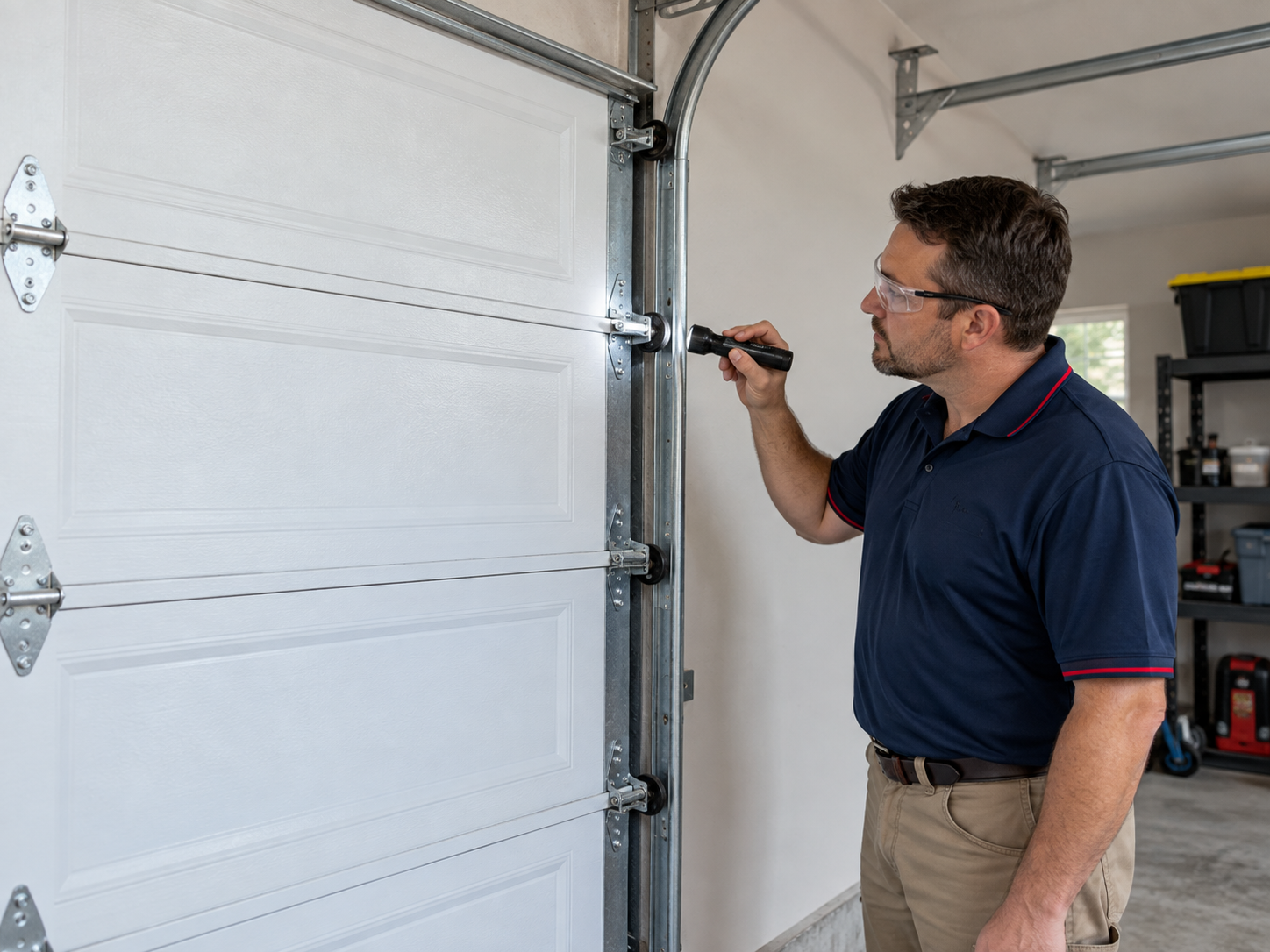
LOOK AT THE WHOLE SYSTEM
The Problem May Be More Than the Opener
Your garage door and opener work together. A spring, cable, track, or roller problem can prevent the door from moving even when the opener still has power.
A professional inspection can help identify the cause and determine the appropriate repair.
Explore Garage Door RepairCHECK 04
Notice What Happens When You Press the Button
The opener’s response can help narrow down the problem. Note what you hear and see without repeatedly cycling a struggling opener.
| What You Notice | What It May Indicate |
|---|---|
| No sound or movement | A power, control, or opener electronics issue. |
| Wall button works, but remote does not | A remote battery, programming, or lock-mode issue. |
| Motor runs, but door stays still | A disconnected trolley or a drive-system problem. |
| Door rises a few inches and stops | A spring, binding, or other mechanical problem. |
| Door starts moving unevenly | A cable, track, or hardware problem. |
These are clues, not a diagnosis. If the opener hums, strains, or repeatedly stops, don’t keep cycling it. A technician can determine whether the issue is with the opener or the door itself.
CHECK 05
Look for an Accidentally Disconnected Trolley
On many ceiling-mounted openers, the emergency-release cord disconnects the door from the opener’s trolley so the door can be operated manually.
If someone recently used that release during a power outage, the motor may run without moving the door.
Check your model’s manual for its reconnection procedure. Do not pull the emergency release while the door is open or partially open, or when you suspect a spring or cable problem. An unsupported door can fall.
If you’re unsure whether the door is safe or properly connected, leave it in place and schedule service.
CHECK 06
Check for Visible Obstructions or Damage
From a safe distance, look for items that may interfere with the door’s movement, such as a storage bin, tool, or another object near its path.
Also note any visible bent track, displaced roller, damaged panel, or loose cable. Don’t reach into the tracks, place your hands between door sections, or attempt to straighten damaged components.
CHECK 07
Watch for Signs of a Broken Spring
Garage door springs counterbalance the door’s weight. When a spring breaks, the opener may struggle, lift the door only slightly, or fail to move it.
Possible signs include:
- A loud bang before the problem began.
- A visible gap in a torsion spring above the door.
- A door that starts to rise and immediately stops.
- Loose cables or uneven movement.
Not every spring system looks the same, and a problem may not be visible.
BEFORE YOUR SERVICE CALL
What to Tell Your Garage Door Technician
A few details can help make your service call more productive:
- Does the wall button work?
- Does the opener make any sound?
- Does the door move at all?
- Did the problem begin after a power outage or loud noise?
- Are any lights flashing or error codes displayed?
- What is the opener’s brand and model, if accessible?
Photos taken from a safe distance may help explain visible damage. There’s no need to recreate the problem repeatedly to capture it.
COMMON QUESTIONS
Garage Door Troubleshooting FAQs
Why does my opener make noise without opening the door?
Possible causes include a disconnected trolley, an internal drive problem, an engaged manual lock, or a mechanical issue with the door. Stop operating it if the motor strains or the door moves unevenly.
Should I increase the opener’s force setting?
Do not increase the force to overcome a stuck or unusually heavy door. That can mask a mechanical problem. Have the door inspected, and follow the manufacturer’s instructions for any adjustments.
Does a garage door that won’t open need to be replaced?
Not necessarily. The problem may involve a remote, opener, spring, or another repairable component. An inspection can help determine whether repair or replacement makes sense.
ONE NATION GARAGE DOORS
Garage Door Still Won’t Open?
If basic checks don’t resolve the issue—or you notice damaged hardware—One Nation Garage Doors can help identify the problem and explain your repair options.